Recovery does not end at hospital discharge. For many families in Nyeri County, the weeks and months at home are when patients need the most practical care, and it is a family member who gives it.
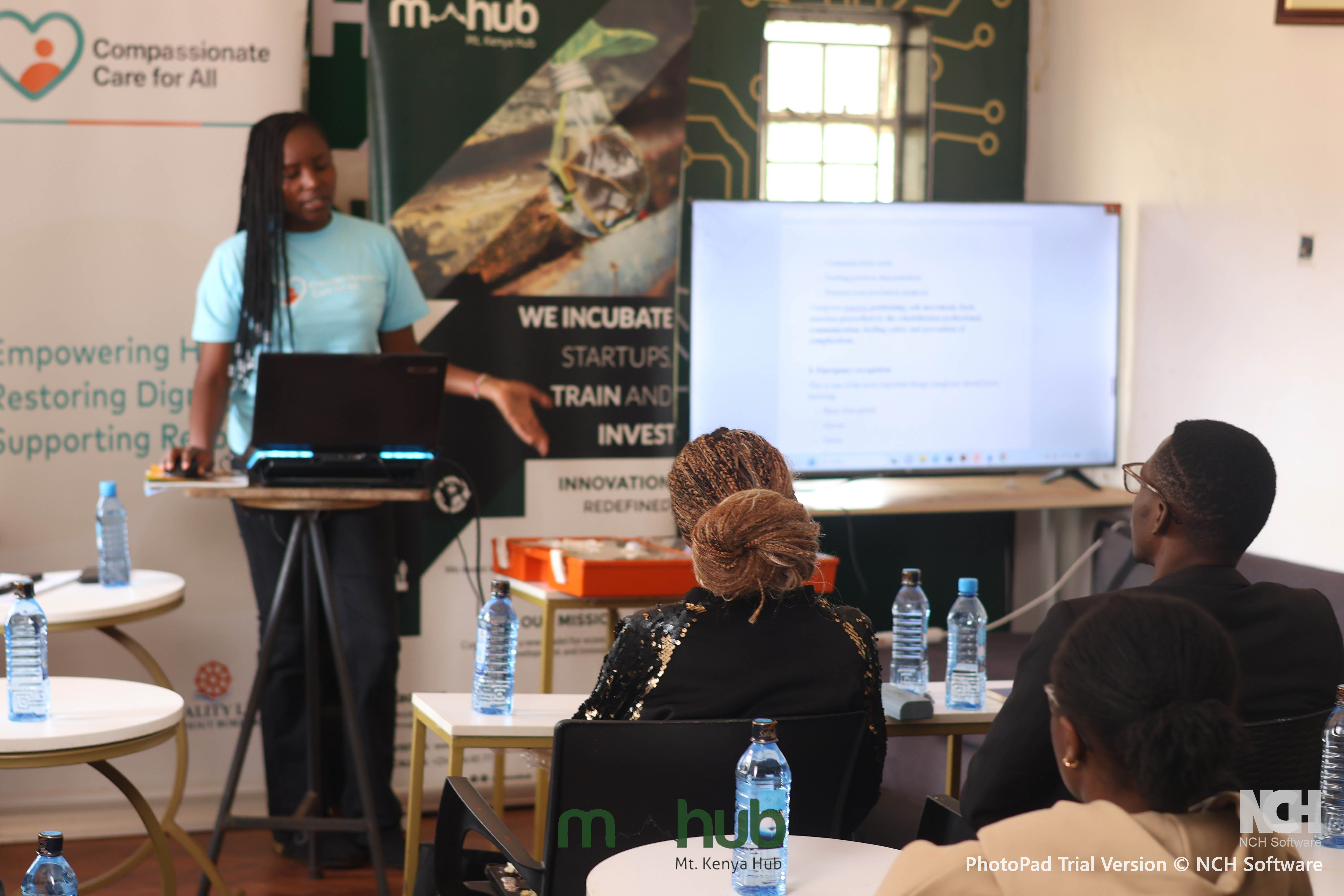
On 7 October 2026, at Mt Kenya Innovation Hub in Nyeri, Compassionate Care for All (CCFA) trained 15 family caregivers in a hands-on session designed to give them the skills and confidence to care safely. Instead of sitting through lectures, caregivers learned by doing. They moved through practical stations with demonstration beds, everyday equipment, charts and real-life scenario cards.
What caregivers practised;
1. Hygiene and infection prevention: handwashing, using gloves correctly, bathing and toileting assistance, and keeping the patient clean.
2. Care of bedridden patients: turning and repositioning, checking the skin, making a bed for a dependent patient, and preventing pressure sores.
3. Safe movement and transfers: helping someone sit up, moving from bed to chair, supporting someone who can partly walk, and protecting the caregiver’s own back.
4. Medication safety: knowing what medicine the patient takes and when, recording each dose, storing medicines safely, what to do about a missed dose, and never changing a dose without a health professional.
5. Basic patient monitoring: taking temperature, blood pressure and pulse, and writing them on an observation chart. The key lesson: know what is normal for this person, notice changes, record them, and know when to seek help.
6. Stroke and paralysis care: positioning, safe movement, exercises prescribed by the rehabilitation professional, communication, feeding safety and preventing complications.
7. Recognizing emergencies: difficulty breathing, sudden weakness or change in consciousness, new stroke symptoms, severe bleeding, seizures, chest pain and sudden confusion. The goal is to recognize the danger, respond appropriately and seek professional help, not to diagnose at home.
8. Caregiver wellbeing: burnout, taking breaks, asking for help, setting boundaries and knowing when to seek psychosocial support.
Caring for the carer
Caregivers are part of the care system too. That is why the training ended with their own wellbeing, because a caregiver who is exhausted cannot give their best care.
Everyone who attended was awarded a certificate. Training is only the beginning, so our team continues to support caregivers through home visits and telehealth follow-up.