
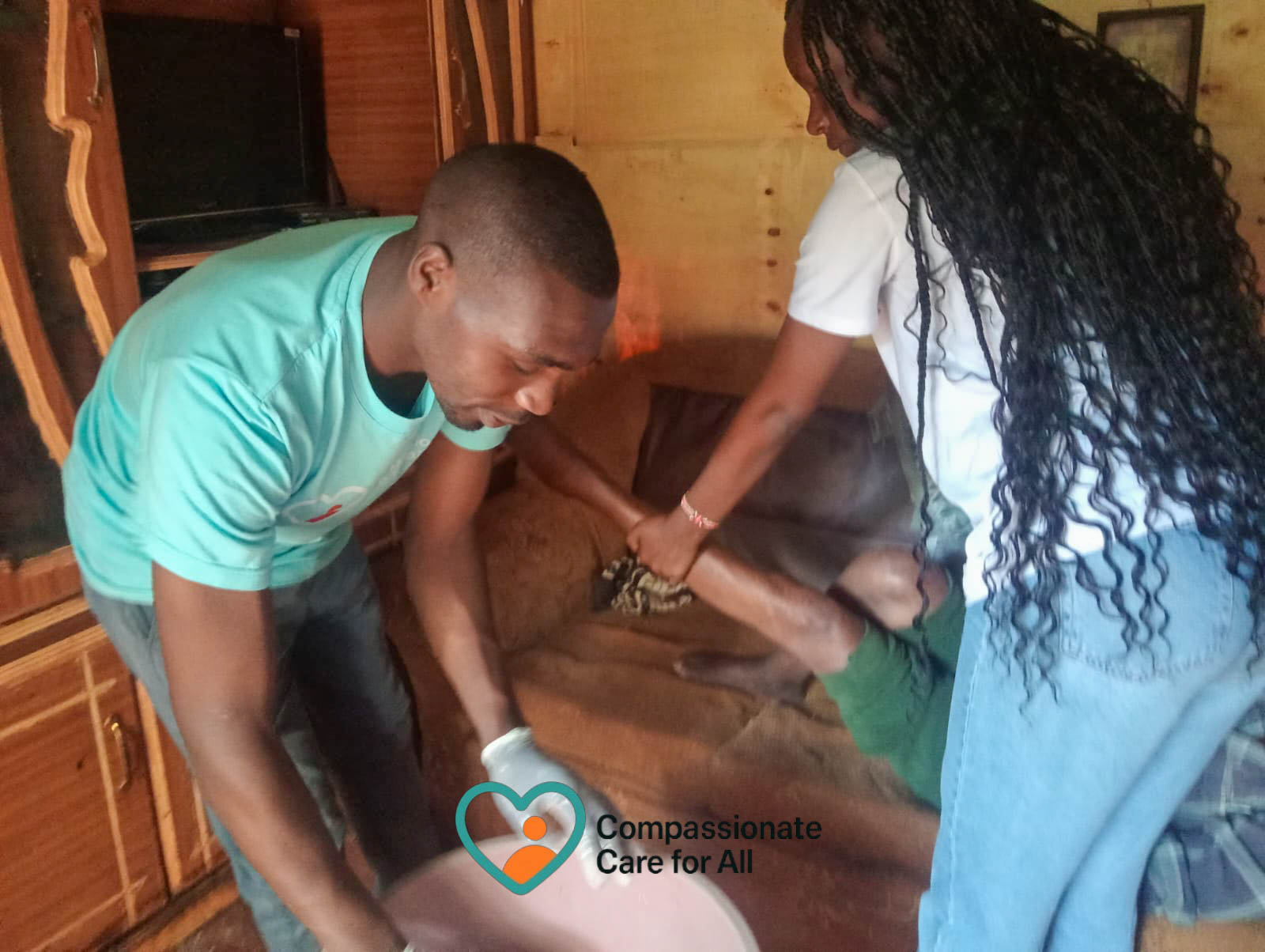
For a patient living with paralysis following complications associated with prostate cancer, recovery and care do not end after the initial assessment. Ongoing support is needed to manage changing needs, maintain comfort, prevent avoidable complications, and support the best possible quality of life.
CCFA continues to follow up with the patient through regular home-based care and physiotherapy. The rehabilitation sessions provide an opportunity to work on movement, positioning, joint mobility, and other exercises appropriate to his condition, while also monitoring his progress and identifying areas that require continued attention.
Because he has significant limitations in movement of the lower limbs, consistent rehabilitation is particularly important. The physiotherapy program is complemented by caregiver education, helping the caregiver understand how to safely support positioning and prescribed exercises between therapy sessions.
During follow-up visits, the CCFA team also checks on the patient's general wellbeing and home-care needs. Attention is given to issues such as pressure injury prevention, comfort, positioning, personal care, and the caregiver's ability to continue providing appropriate support at home.
The journey is not always straightforward. Living with paralysis can bring significant physical, emotional, and practical challenges for both the patient and the family. This is why CCFA's approach extends beyond individual therapy sessions to include continued caregiver support and follow-up.
Through ongoing physiotherapy and home-based care, CCFA remains alongside the patient and caregiver as they navigate this long-term journey.